Introduction
Price negotiation in international trade is not just about getting the lowest quote — it’s about building a sustainable cost structure that ensures product quality, supplier cooperation, and long-term margin stability.
In pet product manufacturing, many importers focus only on the unit price but overlook hidden costs such as packaging, defects, logistics, and payment terms.
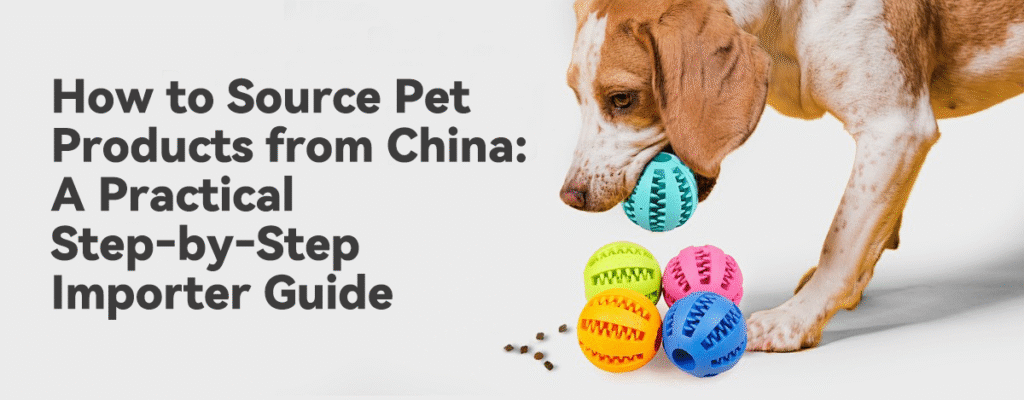
This article provides a step-by-step practical guide for negotiating prices and controlling costs when sourcing pet products from China.
1️⃣ Step 1: Understand the Supplier’s Cost Structure
Before negotiating, you must understand what drives a supplier’s cost:
-
Raw materials: fabric, webbing, metal parts, fillers
-
Labor: cutting, sewing, inspection, packing
-
Overhead: electricity, rent, depreciation, management
-
Profit margin: typically 10 – 25 % depending on complexity
Request a breakdown quotation sheet (BOM-level) instead of a one-line price.
That helps you see where costs can be optimized — for example, switching a non-critical trim, or changing packaging to reduce volume.
📊 Reference: World Bank “Manufacturing Cost Structure in Asia” (2023) — raw materials typically account for 60–70 % of total pet accessory production costs.
worldbank.org
2️⃣ Step 2: Compare Multiple Quotes Fairly
Never compare prices without confirming specifications are identical.
-
Standardize all RFQs (Request for Quotation) with same drawings, fabric specs, and quantities.
-
Convert to EXW or FOB USD/unit for apples-to-apples comparison.
-
If one supplier is significantly lower, check material substitutions or smaller component specs.
3️⃣ Step 3: Negotiate Based on Volume & Forecast
Suppliers are more flexible when they can plan capacity.
Provide a 6-month or annual forecast, even if tentative, to gain leverage:
“If trial order = 500 pcs passes QC, next = 5 000 pcs — can we pre-agree a 2 % discount at scale?”
According to the International Trade Centre (ITC), buyers providing clear forecasts reduce unit prices by 4–6 % on average.
(intracen.org)
4️⃣ Step 4: Optimize Payment Terms & Exchange
Typical trade terms:
-
30 % deposit + 70 % before shipment (standard)
-
LC at sight – for larger orders
-
OA 30/60 – for trusted long-term partners
Ask about supplier’s currency flexibility. Some accept USD or CNY, allowing buyers to hedge exchange rate risk through forward contracts or multi-currency accounts.
5️⃣ Step 5: Identify Hidden Costs in the Supply Chain
Hidden costs often exceed price savings:
-
Re-work due to unclear specs
-
Excess packaging volume (higher freight)
-
Carton weight above carrier tier
-
Long storage time waiting for full container
Perform total landed cost analysis at least once per quarter, combining product + logistics + duty + overhead.
📈 Reference: OECD Trade Outlook 2024 – “Hidden logistics inefficiencies cost importers up to 12 % of gross margin.”
oecd.org/trade
6️⃣ Step 6: Build Long-Term
Instead of one-time squeezing, design a tiered pricing agreement:
| Volume (pcs) |
Unit Price (USD FOB) |
Notes |
| 500 – 999 pcs |
$5.50 |
Trial order |
| 1 000 – 4 999 pcs |
$5.25 |
Standard production |
| ≥ 5 000 pcs |
$5.00 |
Volume discount + priority lead time |
This motivates the factory to prioritize your orders while keeping transparency.
odel
✅ Conclusion
Effective price negotiation is not about short-term victory but about designing a cost system that both buyer and supplier can sustain.
By understanding cost composition, benchmarking fairly, optimizing payment and logistics, and tracking hidden expenses, you can maintain healthy profit margins while securing quality and reliability.
🔗 Authoritative References